August 2020
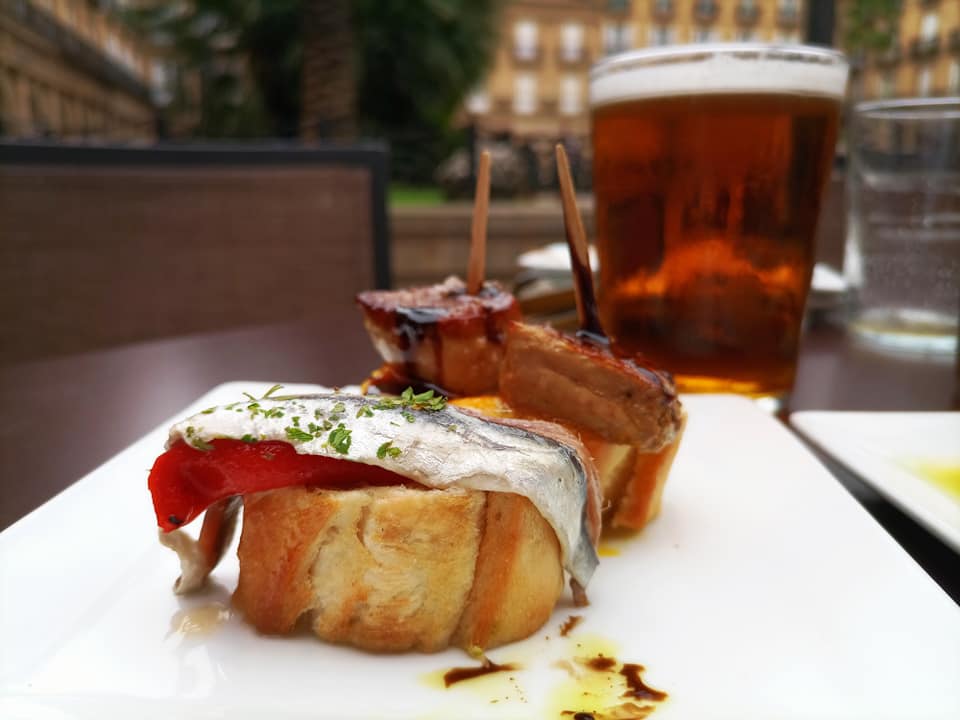
After Burgos, we drove less than 2 hours up toward Bilbao. The countryside becomes very different, with pine trees and mountains, it looks a lot like Northern California. With temperatures probably 20 degrees cooler than Madrid, we finally felt like we were in another part of the country, and actually we were, since this was now Basque Country and I suggest you don’t forget it. So it’s not tapas, it’s pintxos (peen-chos). If you ask for a tapa, prepare to be derided.
The highways are just wonderful; very clean, no billboards, organized periodic service areas with a tidy gas station and bathrooms. No nightmare 5-acre truck stops. As we got closer to Bilbao the traffic picked up, and I, the intrepid navigator, had to kick it up a notch and pay attention. We made it into the downtown area and were prepared to park our car at the hotel but learned our first good road trip lesson: in Spain you have to reserve parking along with your room. So we were directed over to the public underground lot, along with the day-trippers and the winos.
The Hotel Ercilla (150€ per night) is a wonderfully old-style Spanish hotel, with a bustling lobby and bellhops who have worked there their whole lives. There were languages flying around all over the place so we felt international and stylish. Their Bar Americano is very swanky, like something from a movie. We got checked in, changed into our big city clothes, and started strolling toward the Guggenheim Museum, which we could see in the distance.

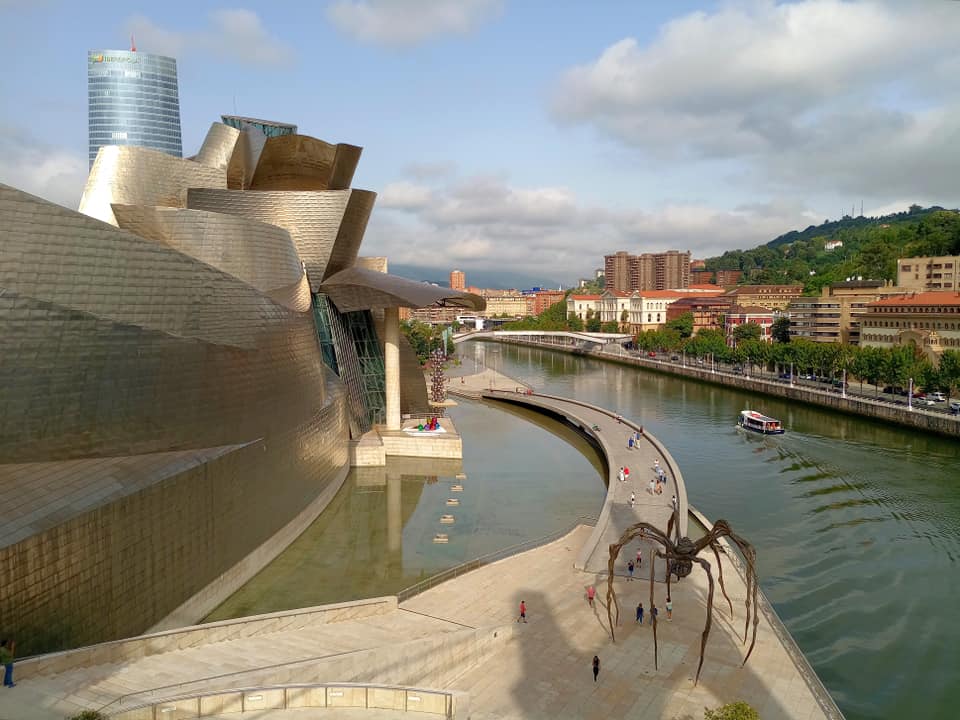
We were told that Bilbao was actually kind of dead until the Guggenheim Museum came along but it is in virtually every picture of the city now, not only because of Gehry’s startling design, but also as a symbol of what a city can transform itself into. The arrival of the Guggenheim in 1997 began an entire redevelopment of the city that changed it from a pretty Basque city to a world class destination.
We got our tickets online (Guggenheim tickets) and were almost first in line the next morning. We spent about 3 hours wandering through the permanent and temporary exhibitions (Jenny Holzer, Richard Serra, Mark Rothko, Jeff Koons, etc), all the while being gently guided by circular walls and catwalks through this amazing open space, free to stop and take in the exhibit, or stare in wonder at the architecture itself. I really can’t recommend it enough.
In our usual fashion, we discovered a restaurant that we loved, Cascanueces, so we made reservations for the next night as well. Like everywhere in Spain, traditional red meat and fish dishes are a very important part of the diet, but it’s wonderful to find it reinvented. We also had pintxos all over the place. Bilbao is pretty good for walking, especially along the redeveloped river walk, but taxis are everywhere as well. Return quotient: ASAP
On the route to San Sebastian, we pulled off the main highway and headed toward the little fishing village of Mutriku. The road was getting more and more narrow as we got closer so we took that to imply a lack of status, but it turned out to be a very charming hillside village with a little bay filled with fishing boats. The locals were all out enjoying their Saturday morning, kids were jumping into the sea, and they all seemed to be friends with each other, if not actually related.

And on to San Sebastián. We scraped together all our Marriott points, upgrades, favors and threats to stay a couple of nights at the glorious Hotel Maria Cristina. We checked in, let them valet the car, and then we oozed into their tender loving care. After a stroll through the neighborhood, we raced back to the hotel and got room service.
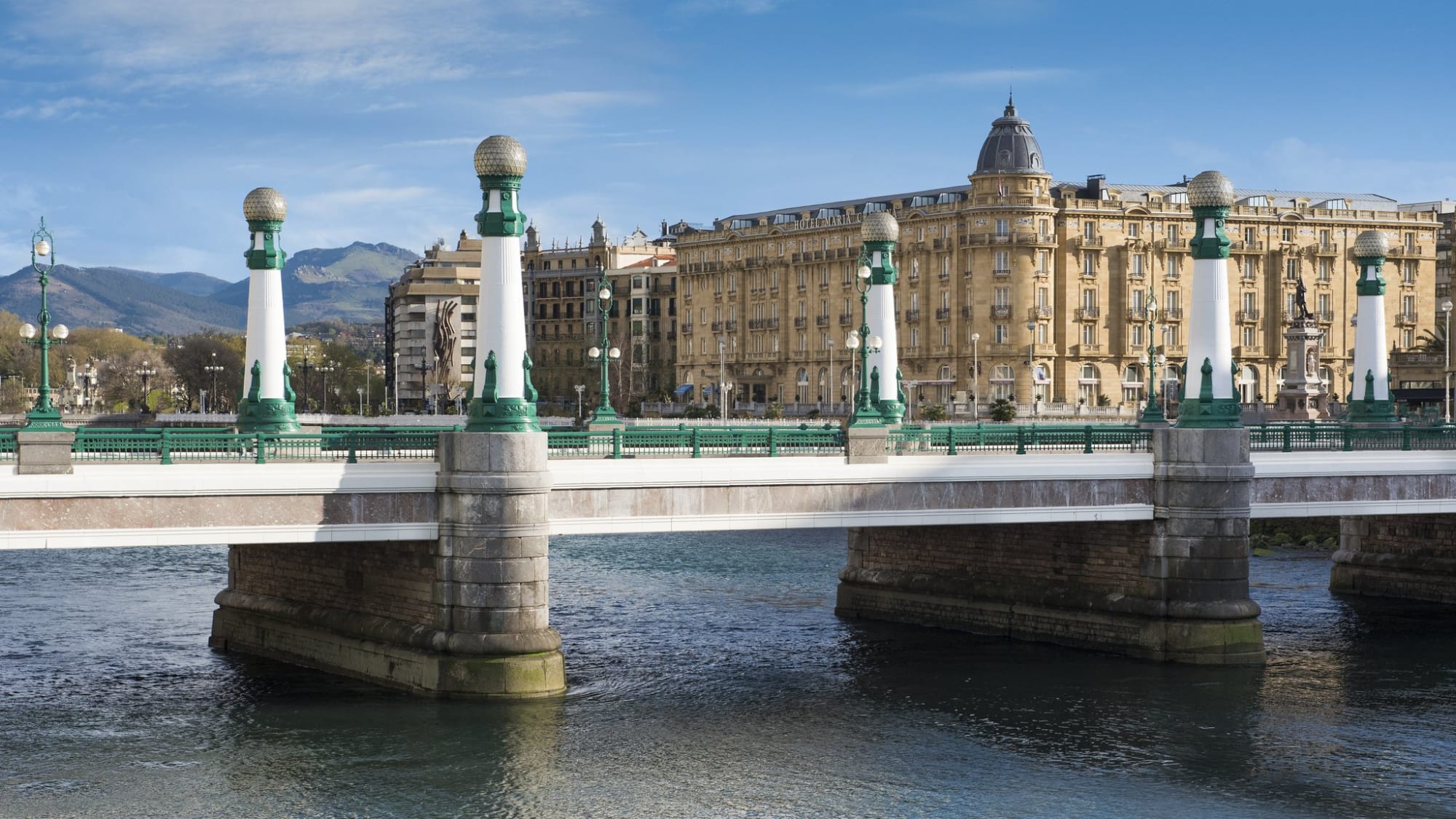
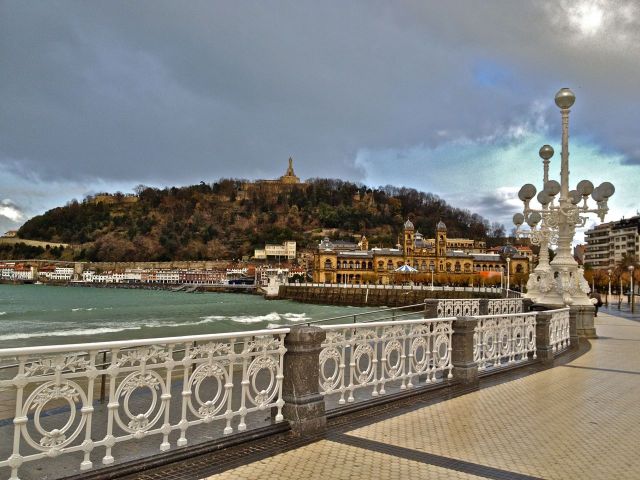
San Sebastian was very busy, I really had no idea it was such a big city. It was established as a summer playground “for the illustrious holidaymakers of the European aristocracy.” There is an extravagant promenade along the seaside, along Playa La Concha, with grand old hotels looking out over the Atlantic. It was very easy to imagine 19th century European royalty strolling along the boardwalk, or taking a dip in the sea from their private changing rooms. We stopped and had a cocktail at Terraza Igueldo, overlooking the charming poor people playing in the sand.
Across the river, the surfers like Playa Zurriola, with its pristine sand and big waves. San Sebastián also has a gothic quarter, buzzing with tiny bars and pintxo cafes, and by Sunday afternoon the competition for a shady outdoor table at a pintxo bar was fierce. We finally found a spot and I guarded it like a bad-tempered chihuahua as Hector ran in to grab our selections. We stayed 2 hours and spent a small fortune just because we couldn’t bear to walk away from it. Return? Absolutely. I think it would be fun to be here in winter, with storms and waves crashing against the windows.
Next up: in search of the spooky town of Elizondo from Dolores Redondo’s Baztan Trilogy!
 travel eat repeat